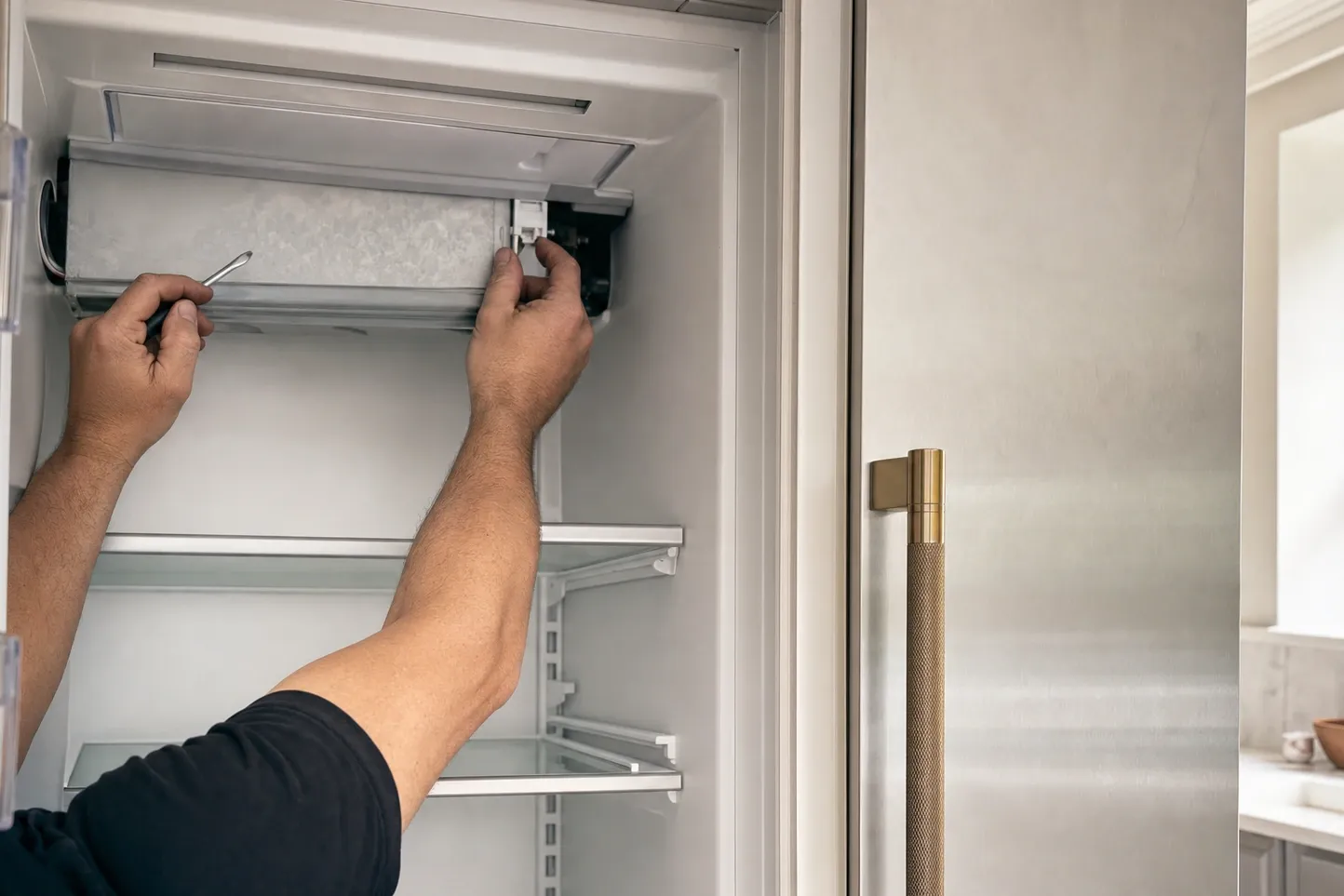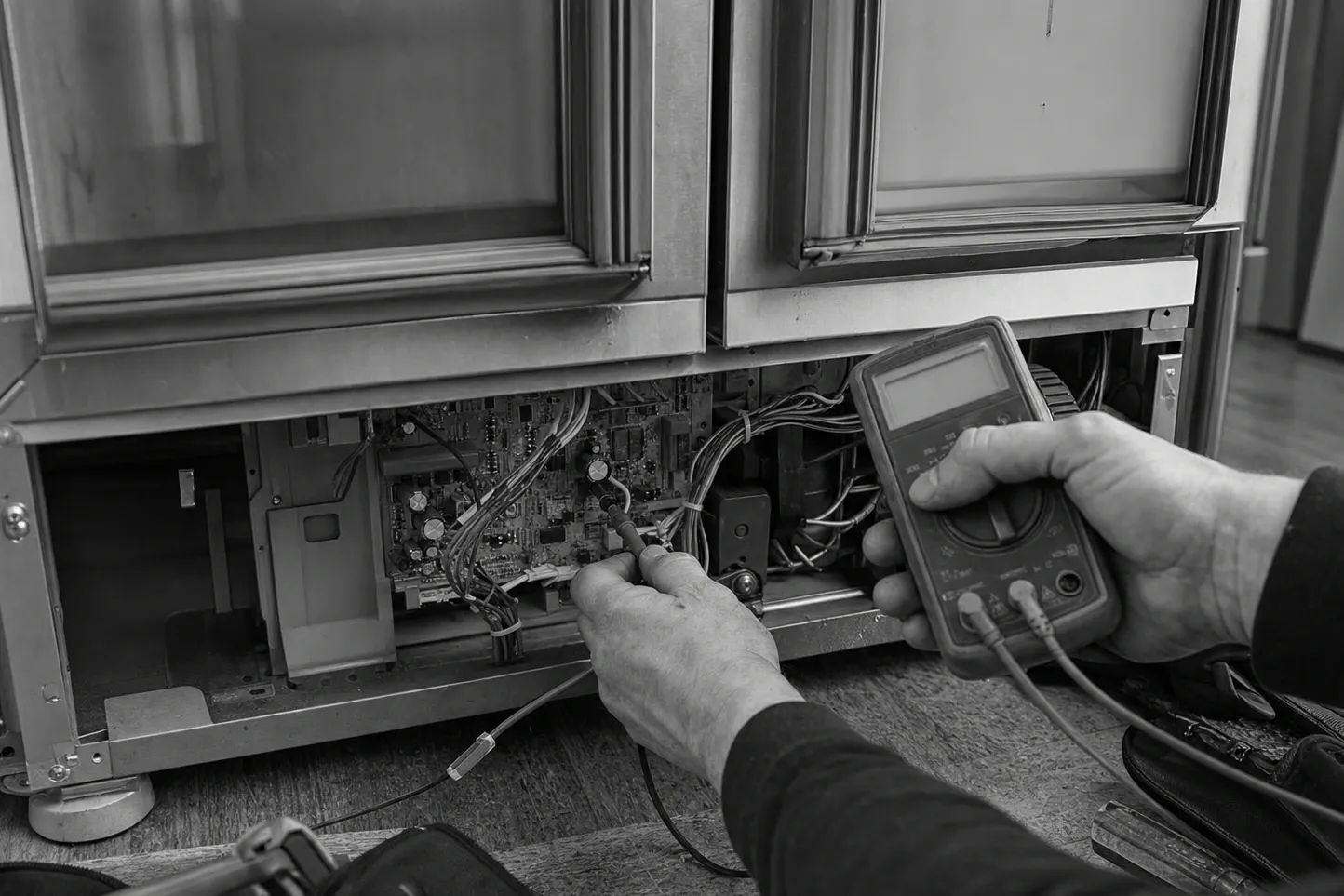
A panel showing nothing is not the same thing as a control holding nothing. On the generations that keep error codes, the memory is where an argument about an intermittent fault is usually settled, and none of it is visible from the kitchen side of the door.
What the control keeps
Codes are registered by particular components, and once registered they stay put until somebody clears them deliberately. A technician brings them up in diagnostic mode, where they appear ahead of the temperature readings rather than instead of them. When that mode ends on a cabinet that had any, the SERVICE indicator is left lit steady — the control saying its memory is not empty. The key sequence that opens the mode is a service procedure and it stays with the technician: there is nothing for an owner to gain by entering it and a fair amount to get wrong.
The fortnight behind the codes
The same control keeps a temperature log covering the preceding fourteen days, compartment by compartment and evaporator by evaporator. On an intermittent complaint that history is worth more than the codes are. It shows whether a cabinet slipped a little each night, fell over once in a heatwave, or has been out of range since long before anybody noticed.
What a stored code does not settle
It names the circuit that reported, not the part that failed, and those differ often enough that replacing by code is how people end up paying twice. There is a second trap in the order of events: where codes already show with SERVICE flashing before diagnostic mode is entered, the cabinet had temperature trouble that may or may not relate to them.
Older cabinets keep less. The 600 Series built before serial 1810000 has a diagnostic mode that reads out live compartment and evaporator temperatures against their letter codes, but nothing numbered to store. Earlier cabinets have no electronics to question at all.
Before anybody arrives
Leave the panel as you found it. Sub-Zero Repair Pro Los Angeles would rather read the machine than be told about it, and a cabinet switched off and on overnight arrives with its evidence already thrown away.
What we usually find
-
A panel that somebody reset the night before the visit and now shows a perfectly clean display
A diagnosis cut short. The flashing indicator was the evidence that the cabinet had been outside its range, and switching the power off removed it without repairing anything.
Quoted after the diagnosis
-
A steady SERVICE indicator on a cabinet the household insists has never given trouble
Codes left in the memory from an episode nobody connected to the machine, never cleared afterwards. They date an old event rather than describe the present one.
Quoted after the diagnosis
-
One code naming a single sensor, on a cabinet whose complaint comes and goes by the week
The connector rather than the sensor, more often than not. The temperature history separates them: a drifted sensor reads wrong steadily, a loose joint reads wrong in bursts.
Defrost heater, thermostat or sensor $280–$640
Which of these it is gets settled at the visit, before a part is ordered — Sub-Zero Repair Pro Los Angeles, (310) 844-1973.
- Written by
- Yuki Tanabe
- Role
- Refrigeration technician — controls and sensors
- In the trade
- 18 years in the trade